


Poker has never been a game of chance.
The first thing you notice is the light, or rather, the careful absence of it. Every serious poker room is dim in the same deliberate way. Not the gloom of neglect but the dark of theatre. Your eyes adjust and find the felt, the chips, the faces of men leaning into the green. At the edges of the windowless room, moving quietly through the shadow: women. Carrying drinks. Taking orders. Circling with the practiced invisibility of people who have always understood they are not the point.
The room has already told you everything you need to know. You just have to be willing to read it. That’s the thing about architecture: before a single card hits the felt, it’s stacked the deck. The game looks like risk, but power never gambles.
A full house
To understand the poker room, you have to understand the particular crisis that produced it. Not a crisis of cards or money, a crisis of space.
The 1950s reorganised the Western interior along strict gendered lines. The home was a woman’s domain, catalogued in pastel, sold back to her in appliance advertisements that made domesticity look like a vocation. The house and the woman became one and the same. The arrangement was suffocating and total. It ran on the sealed logic of a system that benefits from being taken for granted.
Then the feminist movement did what movements do: it refused. Women pushed into workplaces, universities, the cafes and public spaces that men had tacitly reserved for themselves since Aristotle codified the distinction between the civic and the domestic. The public masculine realm, the arena where men proved things to each other, was filling up with women who hadn’t been invited and didn’t care. This wave of women was emasculating the public and leaving traditional masculinity without a room of its own.
A man without a room
There’s a line Michael Kimmel uses that I keep coming back to. Men, he writes, must prove their masculinity to other men in the homosocial arena. They must do this in front of their peers, repeatedly, for their entire lives. Take the stage away and you don’t just have unemployed men. You have men who have nowhere to perform.
Postwar America took the stage away. There was no war to fight. No frontier. No mechanism for the old proofs of sacrifice, courage, and physical dominance over other men in contexts that society had agreed to call honourable. The G.I. Bill put men in suburbs with lawns and wives and appliances, in houses that belonged, in every cultural and psychological sense, to the women inside them. The pastel kitchen was hers. The catalogue was addressed to her. The man came home to it the way a guest arrives at someone else’s party.
So masculinity adapted, as it always does. It stopped proving itself through strength and started proving itself through money. He who provides, dominates. Women went back into the home as dependents. Men went back to the office as the people who made the money that made the home possible. The housewife-provider stereotype set like concrete. Putting women firmly back into the private-domestic, giving the masculine a new work-social hierarchy to play in.
The Bachelor
As with any societal expectation, people will always try to flip the script. On one side, the feminists campaigned for financial independence and liveable wages. They were fighting to destroy the oppression of domesticity by refusing the gendered roles altogether.
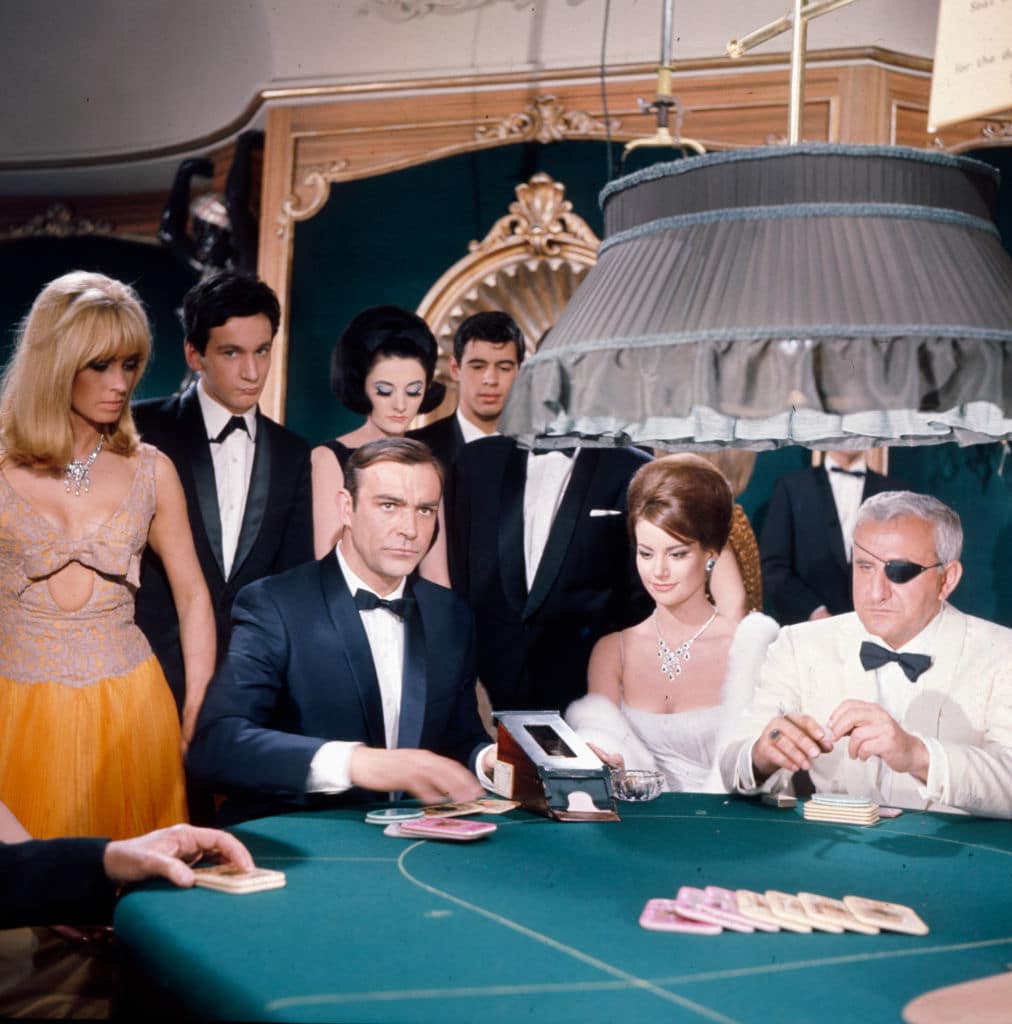
On the other appeared the housewife’s mirror: the bachelor. He didn’t seek to destroy but to pervert. He took domesticity and colonised it, inverting everything it represented while remaining in power. No wife, no dependents, no reliance on the weaker sex at all. Suave, solvent, answerable to nothing but his own appetite.
He built his own private kingdom and declared it masculine by decree, outsourcing to machinery and a rotating cast of faceless women the comforts a wife would once have provided.
He had taken the feminine Private space and put his name on it, the way conquerors rename cities. To pull this off without social penalty, he needed a philosophy. Hugh Hefner was happy to provide one.
Hefner changes the locks
Short velvet robe, an old fashioned, and a rotating vibrating bed of bunnies. He’s not just a man, he’s The Man. Hugh Hefner created a new masculinity outside of the ‘outside’: one where you can quote Kant by the fireplace, drink martinis (shaken not stirred) and enjoy interior design, all without rumours that you’re a “friend of Dorothy”.
He launched Playboy in 1953 with a founding editorial that stands as one of the most strategically loaded texts in the history of interior design.
“Most of today’s “magazines for men” spend all their time out-of-doors-thrashing through thorny thickets or splashing about in fast flowing streams. We’ll be out there too, occasionally, but we don’t mind telling you in advance- we plan on spending most of our time inside.
We like our apartment. We enjoy mixing up cocktails and an hors d’oeuvre or two, putting a little mood music on the phonograph, and inviting in a female acquaintance for a quiet discussion on Picasso, Nietzsche, jazz, sex.”
-Playboy page 1 issue 1
Read it again, slowly, as a territorial claim about space rather than lifestyle. The apartment is masculine by occupation. He owns the space, she appears in it only as a guest and departs as one. She is not a resident. She is an amenity.
The genius, such as it is, was that Hefner understood his project architecturally before he understood it ideologically. He domesticated masculinity, trading hunting lodges for modernist interiors. His Playboy Clubs codified a new rule: space itself would signal male authority. He was showing them what it would look like: in photographs, furniture recommendations, and apartment layouts published alongside the centrefolds. The magazine was a design manual disguised as pornography.
What the Modernists left behind
“I’d Crawl a Mile for Playboy”- Reyner Banham
Hefner didn’t do this alone. He had considerable help from the most prestigious architectural movement of the century, which had been doing the same ideological work for decades without anyone calling it that.
Modernism spoke the language of liberation. Free from ornament, tradition, and the weight of historical form. What we often don’t discuss is that it was also free of femininity. It removed women from the domestic sphere as full inhabitants and brought them back as objectified decoration.
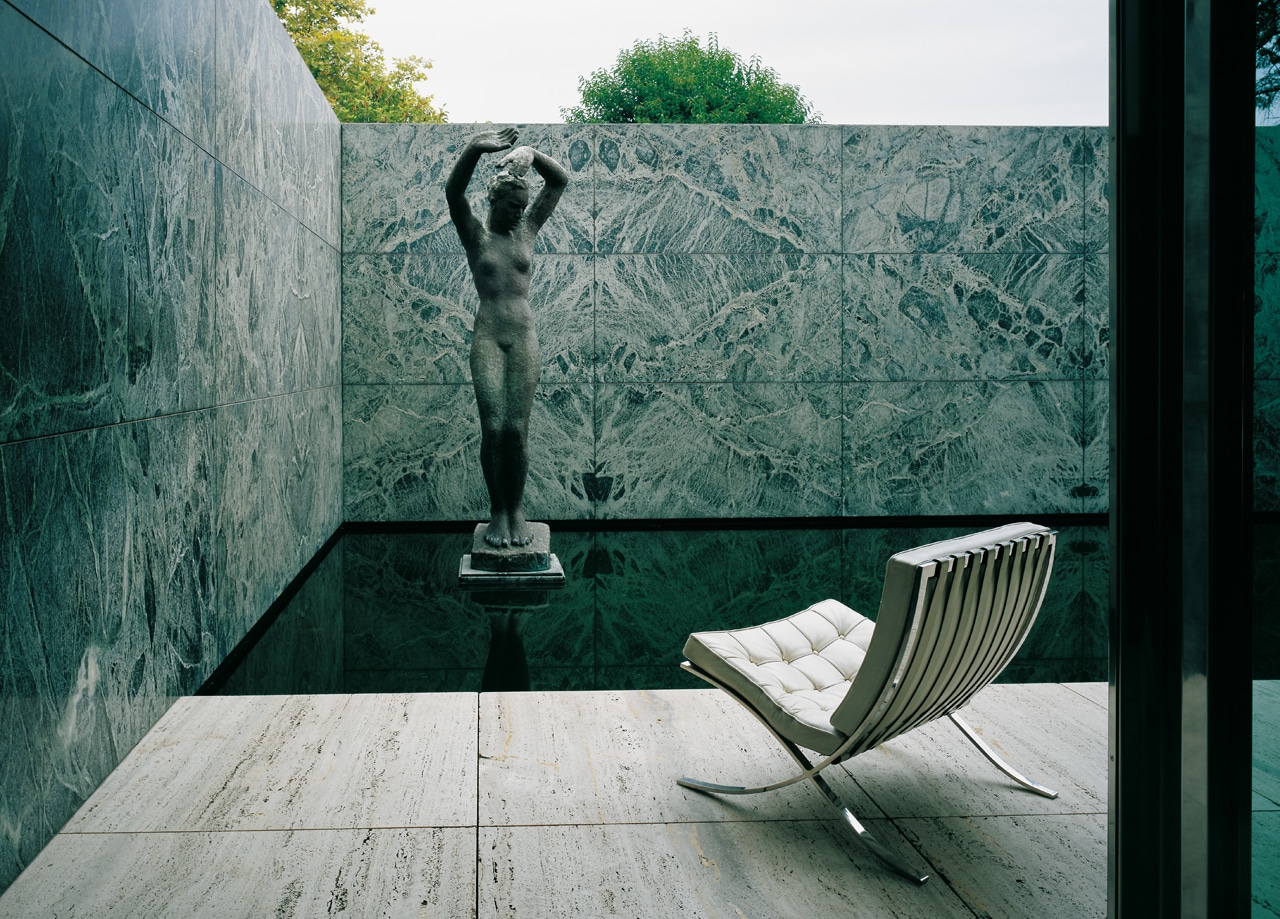
Look at the Barcelona Pavilion. Mies places a female sculpture inside the space. She is not a user of the room, not an inhabitant. She is an object among objects, a formal counterpoint to the marble.
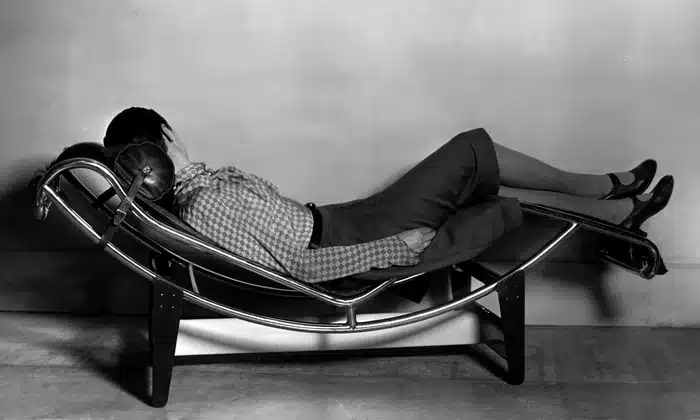
Corbusier photographed his interiors with women placed as ornament on his unornamented furniture. Posed against the furniture in the same way a car advertisement uses a woman against a bonnet: as demonstration of the product’s appeal, not as someone to whom the product belongs. Women lost their place as inhabitants, being reduced to aesthetics, temporary objects in rooms that do not belong to them.
A stacked deck
Beatriz Preciado puts the mechanism plainly:
“If you want to change a man, change his apartment. If you want to modify gender, transform architecture. If you want to modify subjectivity act upon interior space.”
-Pornotopia: An Essay on Playboy’s Architecture and Biopolitics. P84
Hefner was a brilliant student of this lesson. His Playboy Clubs were modernist interiors precisely because modernism had already cleared away the feminine. The Eames chairs, the glass walls, the cantilevered shelving, all of it signalled masculine intellect and control. The architecture had already done the argument, Hefner just moved in.
The pornographic imagery completed what the furniture began. The housewife bent over a stove, the girl next door surprised in private moments. These images didn’t merely titillate. They invaded. They perverted the domestic space women had claimed as their own into something that could be watched, consumed, possessed from a distance. In doing so they destroyed the idea of the feminine Private space. It gave men power over the domestic again, not by living in it, but by watching it. Now you didn’t even need to be a bachelor to own the domestic, through pornography you could knock down one of the house’s walls and put a one-way mirror in its place.
Now Hefner had the complete package: a philosophy, an aesthetic, and a spatial template. All he needed was a room where men could perform it in public, with real stakes, in front of each other. Luckily for him someone had already built one.
Blood sport
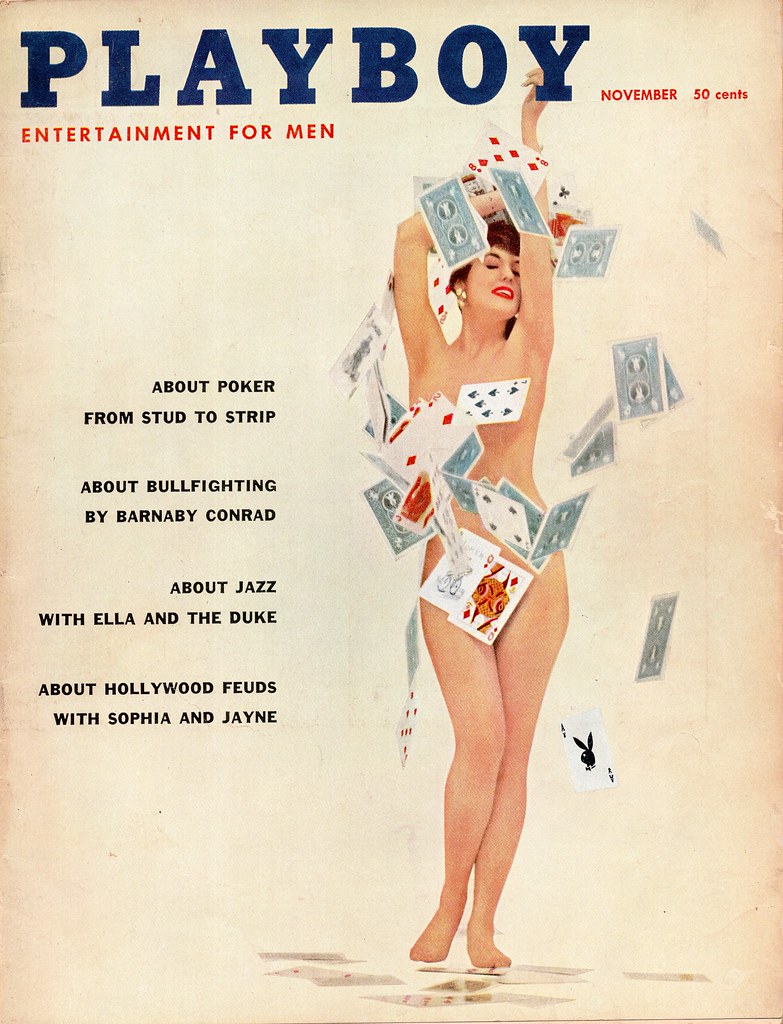
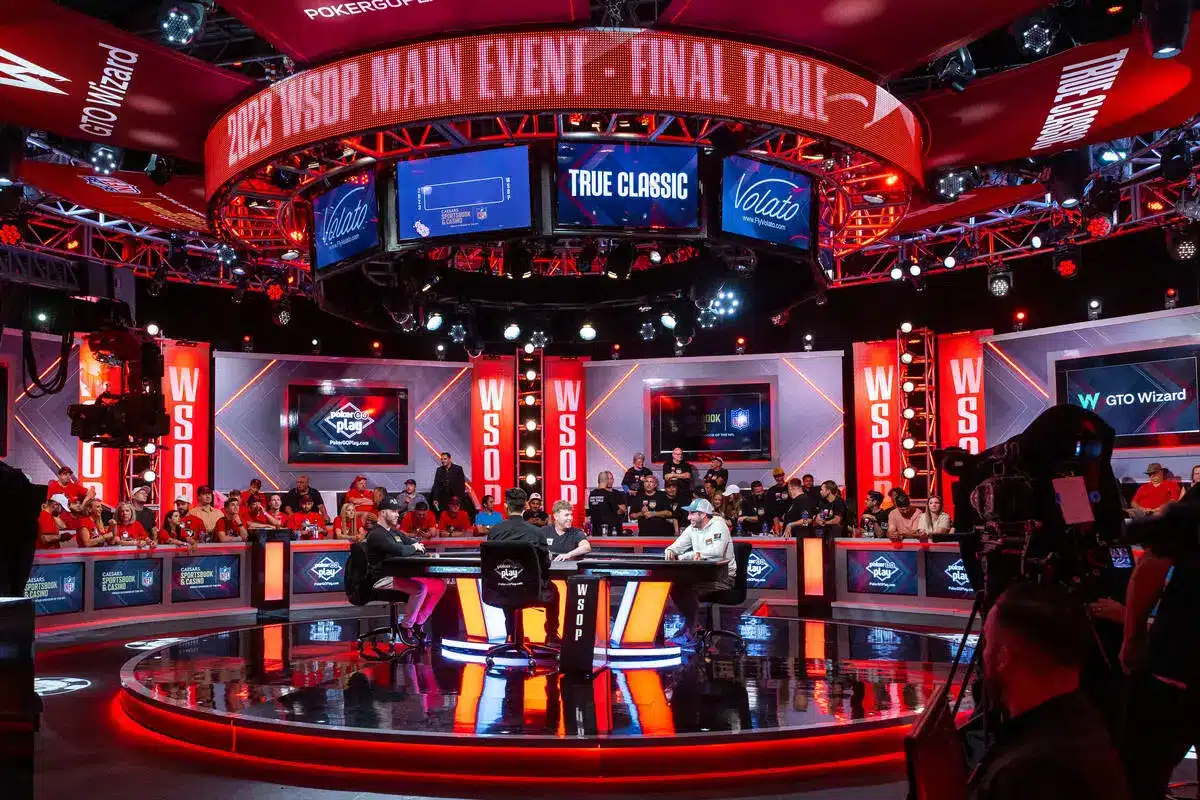
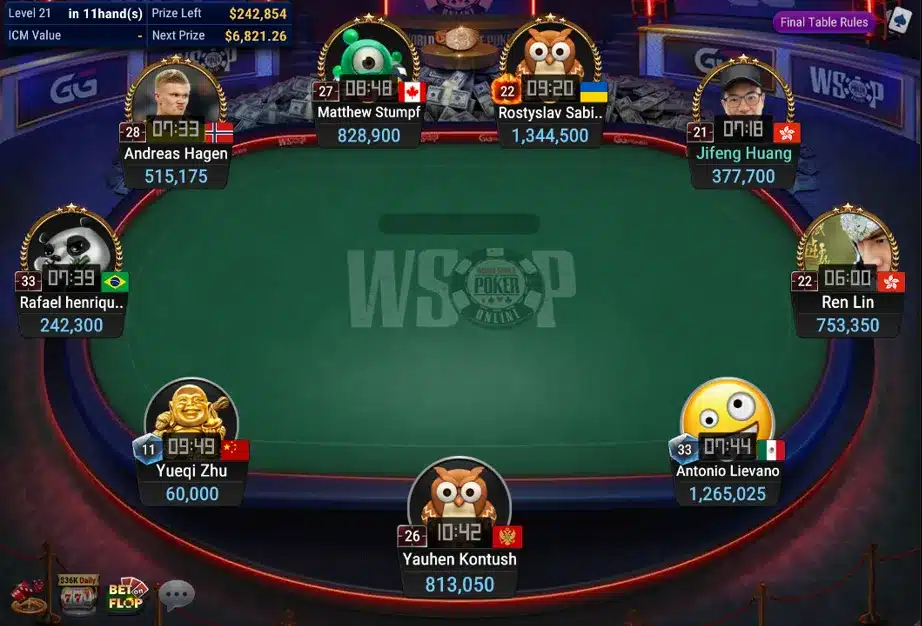
It is not a coincidence that one of Playboy’s first cultural ventures was poker. The game was ready-made for the playboy philosophy. With a masculinity based on intellectual dominance and the disposability of women, the casino provided a neo-gladiator ring. Men fantasise about winning big to such an extent that they’ll risk it all, and women seeking power can’t take their eyes off them fingering the chips.
John Moss, writing in Playboy in November 1957, laid out what poker was actually for with a frankness you rarely encounter:
“Poker is a game played by men for blood. And by this I mean that the stakes must be high enough to cause pain to a heavy loser.”
In an era without warfare, without gladiatorial combat, without any socially sanctioned arena for men to genuinely destroy each other and call it honourable, the poker table offered a modern substitute. You cannot behead your rival. You can, however, take everything he has, slowly and publicly, in front of other men who will remember it. The humiliation is financial but the wound is old. Lose a fight and you recover. Lose at poker and the loss is real, permanent, witnessed.
The architecture of permission
But there is a second thing poker offers that its mythology tends to obscure: it is one of the only spaces in which men are permitted to be emotionally present with each other.
This sounds like a paradox. However, think about the geography of masculine sociality. Women’s spaces tend to organise around communication, wherein the conversation is the point. The brunch or the wine night is simply the room the conversation lives in. Men’s spaces organise around activity like sport or concerts. The task that provides cover for proximity and feeling. Football manages this through physical contact: in the embrace after a goal, in the pile-on, in the ritual permission to say, “I love you, man” and have everyone understand that the game is absorbing the emotion so no one has to carry it home. Poker, a non-contact game, solves the same problem through architecture. When five guys sit around a table with a deck of cards they create a new spatial dynamic; the perfect space for the repressed masculine to reach out.
Reading the room
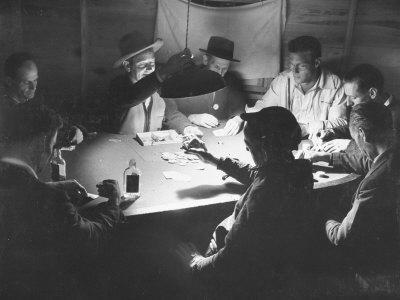
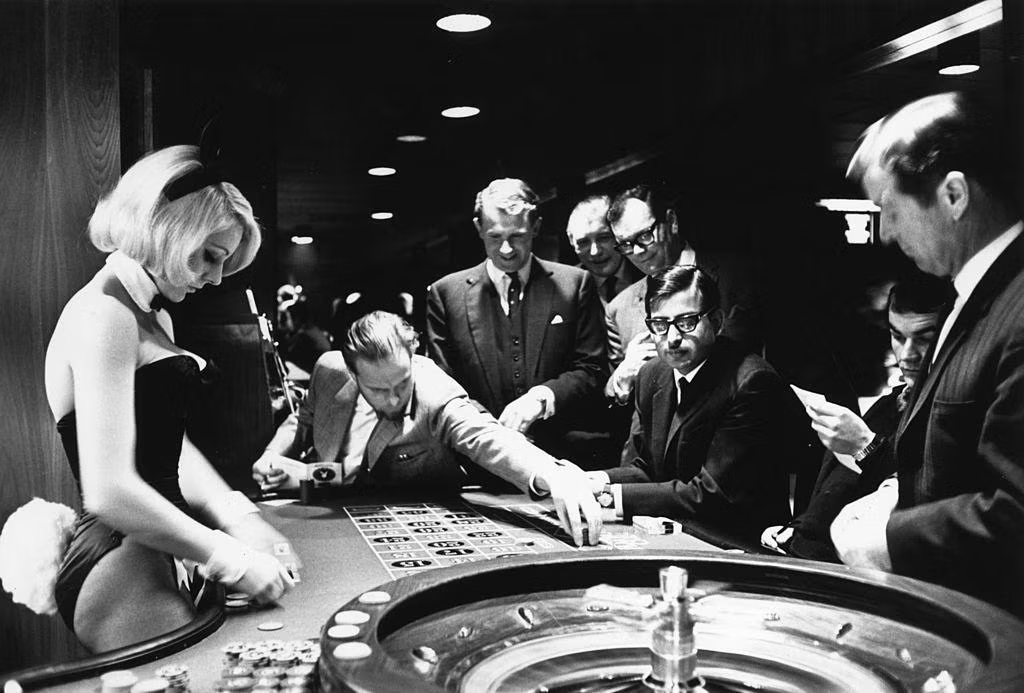
The plush red rooms, the low light, the women moving at the periphery, all of it is deliberate. The sexuality is outsourced to the environment, held in the velvet and the mirrors, so that the men at the table don’t have to perform it themselves. The room carries the masculine display. And inside that display, briefly, something more exposed becomes possible. You can read a man’s face. Sit with him in silence that means something. You can be, without anyone having to call it that, intimate. Their patriarchal masks are hung among the velvet for safekeeping and the men under the lamplight are just people for a moment.
This is the poker room’s genuine architectural achievement. It creates emotional permission by aestheticising power. The room is so aggressively masculine that tenderness can hide inside it.
Which makes what happens to women in that space all the more instructive.
By design
Look at the design choices carefully. Mirrored floors, let’s be honest about what that communicates: the female body is a problem to manage in this space, not a presence to accommodate. Secondly, the continuation of using women as decoration. They are present at the table’s edges in service roles: servers, occasionally dealers, and at certain venues masseuses, circulating mid-play as a supposed de-stress mechanism. Ask a simple question: would a woman player call over a male masseuse during a hand? Sit with what the room’s reaction would be. The design of poker is essential to the masculinisation of poker.
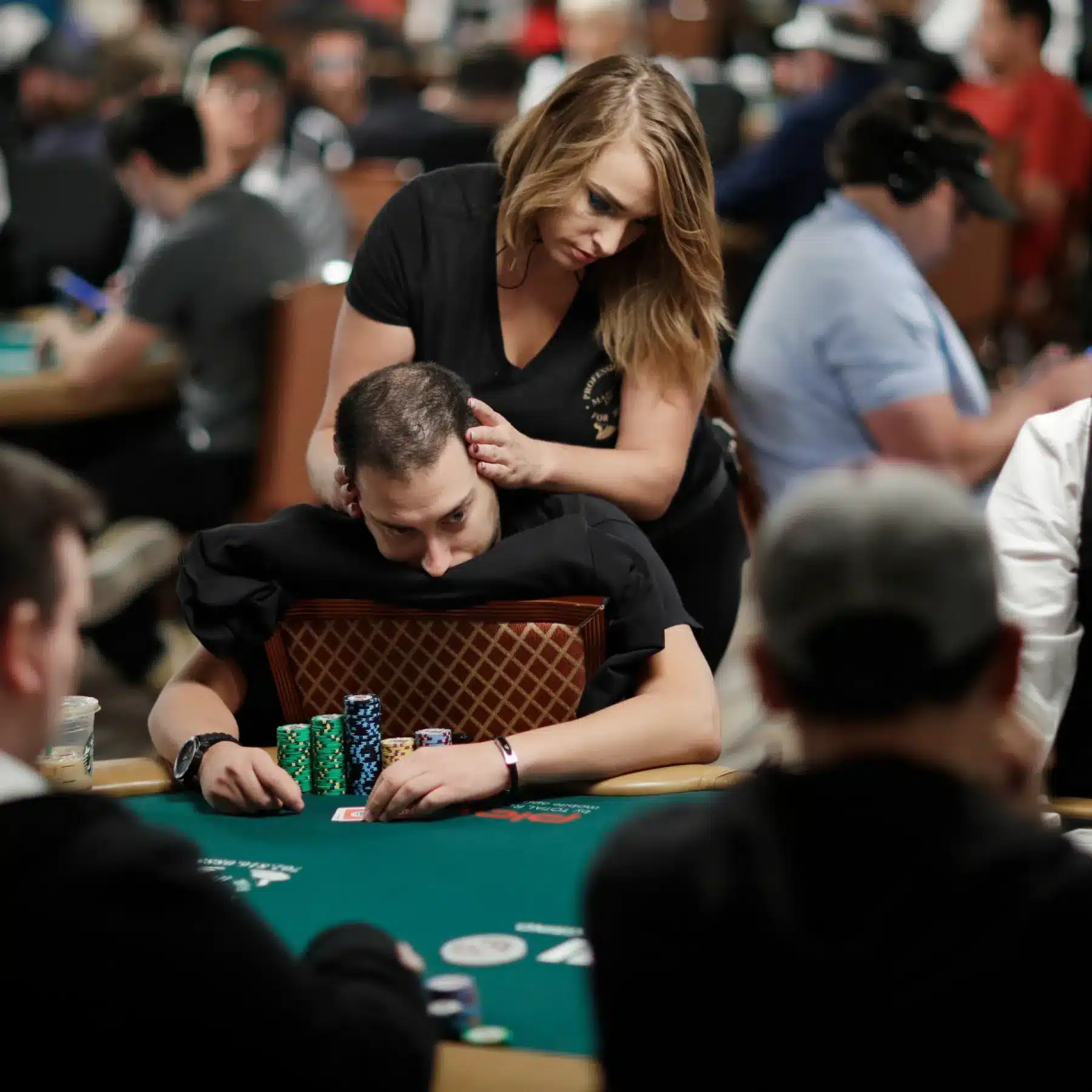
I doubt many of these die-hard poker players would continue if the venues were pretty pink and the cards were backed with glitter. The original playboy casinos called back to the old gentleman’s clubs of the James Bond era. When we look at the modern poker space with their neon-lit Vegas-style tournament halls, it’s changed but the playboy is still there hiding in the glare. Instead of Bond it follows the post-modernist ideals of masculinity developing alongside the virtual gamer culture.
Herd architecture
Poker culture runs on hierarchy, what sociologists call Communities of Practice, where status determines access and collaboration builds the skill that earns more status. Women enter these structures already ranked lower, which means they’re excluded from the informal collaboration within their skill level that makes serious players serious.

The early 2000s online poker boom turbocharged this, importing a generation shaped by gaming culture at its most hostile: the flaming, the hazing, the coordinated performance of exclusion directed at anyone who didn’t fit the profile. What took root was something deeper than bad manners: a herd mentality so powerful that even the best players in the world eventually succumbed. In 2021, a significant portion of the serious poker community piled into Bored Ape NFTs together, because that’s what the room was doing, and in this room, you follow the room. The APEademic wasn’t an anomaly. It was the culture working exactly as designed: hierarchy first, independent judgment second, anyone outside the group third.
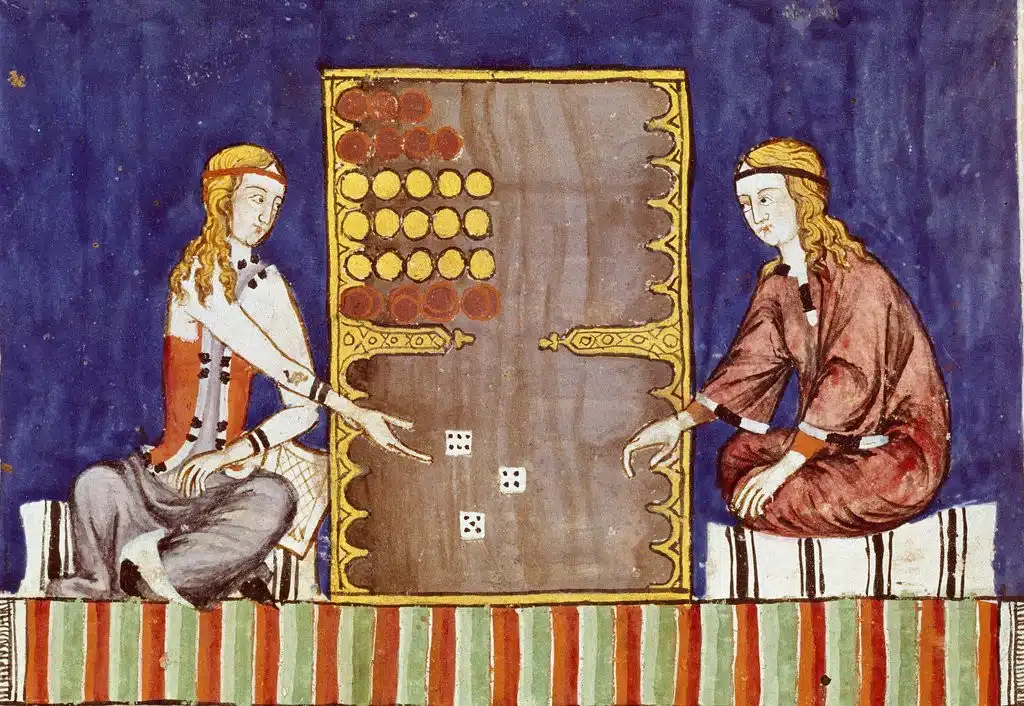
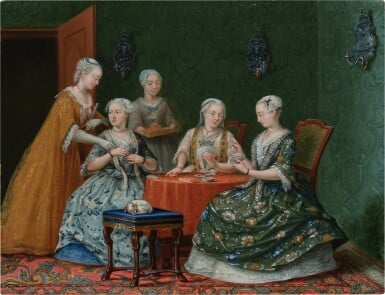
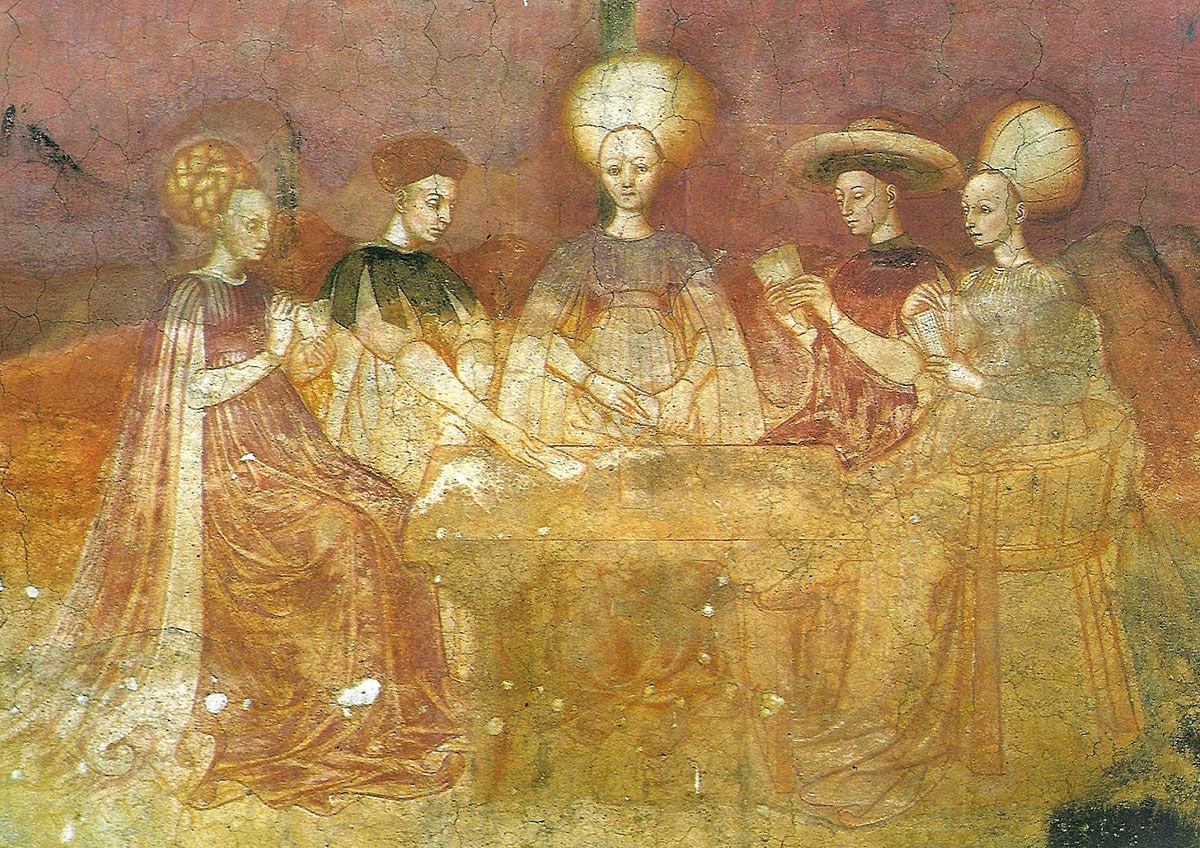
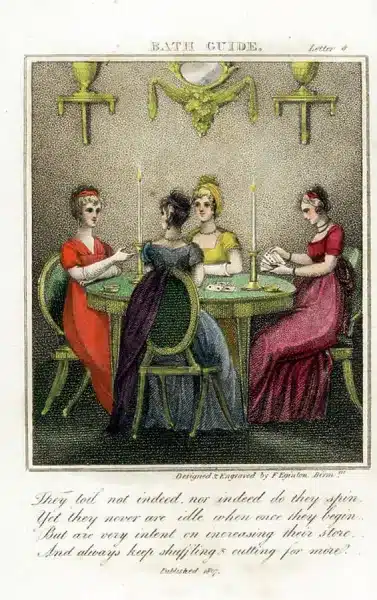
And yet the historical record is unambiguous: poker did not start this way. Jane Austen wrote of women winning at cards. Medieval manuscripts, Dutch masters, Renaissance frescoes, the evidence is everywhere, stretching back centuries. Aristocratic women were the dominant parlour game players of their era. Women have been at the table since games were invented.
They didn’t leave. They were removed. The Playboy masculinity needed a room, and it took this one.
Call the bluff
What do women do in a room that doesn’t want them? Many do what women have done in architecture, law, finance, surgery, and every other space that built its culture before they arrived: they neutralise. As a way to minimise any discrimination against them, they dress down their womanhood, adopt the room’s vocabulary, perform a kind of strategic invisibility. They become poker players first and women as an afterthought, hoping the room will notice the skill and forget the gender.
Susan Bordo identified the impossibility of this decades ago: “In a culture that is in fact constructed by gender duality… one cannot simply be ‘human’… Our language, intellectual history, and social forms are ‘gendered’; there is no escape from this fact.”
You cannot opt out of the room’s assumptions by pretending they don’t apply to you. The room still knows what you are. The designer Jane Thompson argued for the harder alternative: not neutrality but contribution. Not mimicry but a genuine female perspective brought fully into the work. She believed, and I think she was right, that the spaces built without women’s full presence are impoverished by the absence, and that the correction is not assimilation but insistence.
“Are women in design different from men in design? Yes or no. At the moment I would say not sufficiently different, because most of the pressures on us are to mimic and match what men are doing in the field… Women can make great contributions by developing their own personal pluralism, by being both feminine and masculine, and by helping others, mainly men, do the same. At the very best I believe that there are valid expressions of male and female principles in design, and it’s the female factor that is decidedly lacking in what is happening in our world today.” Jane Thompson
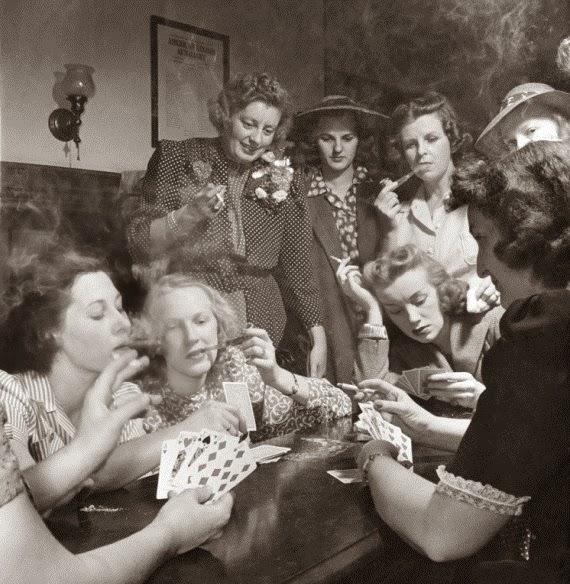
Poker, when it tries, gestures toward this. The industry has started wrapping “female” emotional intelligence in acceptably masculine language. They call it tilt management, rather than processing your emotions; reads rather than empathy. Some organisations have diversity programmes now. The vocabulary is beginning to move, which is something, even if the rooms look exactly as they did in 1957.
Let’s chance it
The poker room in its current form is a stage set, purpose-built to perform a specific kind of patriarchal power, and it performs it continuously, regardless of whether anyone in the room intends it to. The velvet is not decoration. The dimness is not atmosphere. The women at the edges are not coincidence. These are arguments, made in the language of space.
Underneath all of that, poker itself is something far richer than the room deserves. It is the management of uncertainty in real time. Risk pursued with the kind of irrational optimism only humanity can pull off. Reading other people, their fear, their confidence, their tells, their bluffs, is perhaps the most intimate thing two strangers can do while fully clothed. None of these are masculine capacities; they are human ones. The game should not be architecturally rigged to exclude half the species from playing it.
This is not an argument for women to take up gambling as a feminist power play. It is an argument that the industry look honestly at what its rooms are saying and decide whether that’s still the message it wants to send. Poker in its current form is violent because the playboy masculinity it works within is violent. The question worth asking is whether you can imagine a poker scene that doesn’t require that violence, one built to support rather than destroy.
The room was designed. Every choice in it was made deliberately, by people who understood exactly what spaces do to the people inside them. Those choices can be made differently. The cards have always been indifferent to who holds them. The room has never been.
Let’s change the room.


This is such an interesting reading of poker as more than just a game. The connection between risk, masculinity, and performance really lands. Would love a comparison to other “games” like finance or trading, they seem to attract similar types.
Thank you so much Andrew! The finance and trading comparison is one I keep coming back to. You’re 100% right about them attracting the same types.
What’s interesting is that trading floors are even more spatially aggressive about it: the open-plan pit was literally designed for men to perform at each other across a room. And of course the “Wolf of Wall Street” mythology has done for finance what Playboy did for poker i.e. given it a philosophy, an aesthetic, and a permission structure. It really deserves its own piece. Watch this space!
Very interesting article, and I agree with the violent feeling you get when you play poker. I used to play with friends and my boyfriend when I was younger. I liked it, but I always refused to play with real money. I didn’t want to get to the point where, if I won, I’d be taking money from my friends. I didn’t want my mind to go to that place. And I often won, even against my boyfriend, who was a passionate player. He would get so angry! Eh eh eh
Thank you for sharing this Elena, it made me laugh! Your anecdote is such a perfect real-world illustration of everything the article is trying to say. The instinct to keep it friendly by not playing for money is such a lovely way to protect something you enjoyed. And quietly winning all along, brilliant. You clearly had the skill without needing the stakes 🙂