

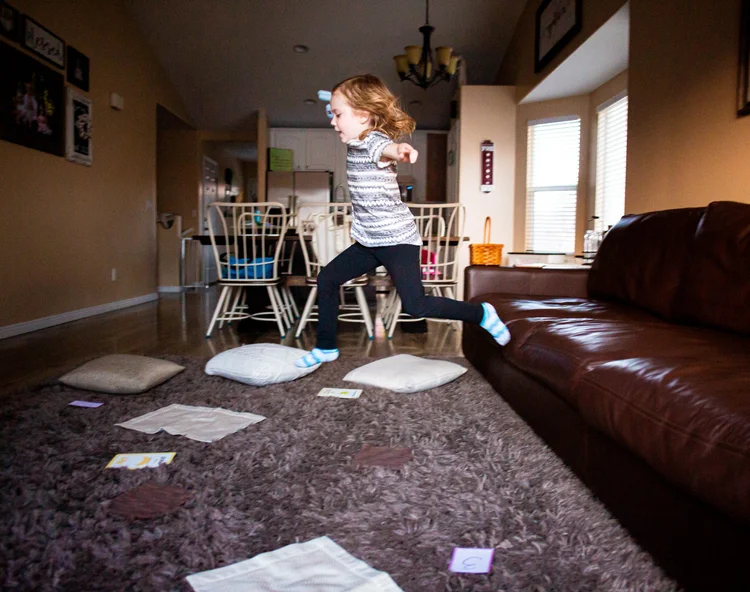
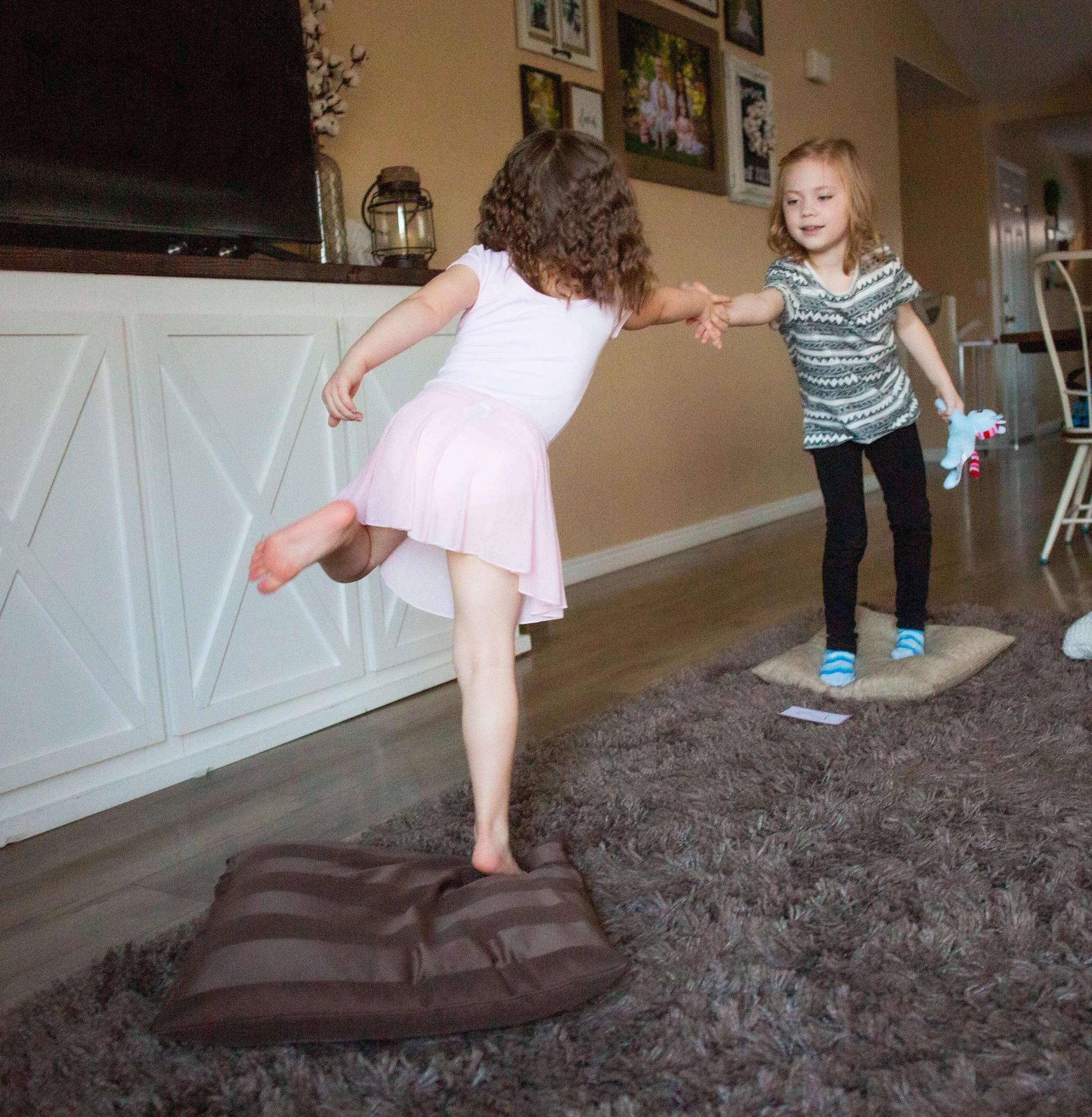
As kids, we understood something architects seem to forget: the floor mattered. We turned it into lava, stacking sofa pillows into mountains. We slid across polished hallways in socks and transformed staircases into rollercoasters. Climbing through life we found play and excitement through floor play. Then in adulthood our paths and our lives flattened.
The world has never been flat so why are our floors?
Today, floors are rarely designed so much as specified. A material gets selected, a detail gets resolved, and attention moves elsewhere. Architecture obsesses over the vertical: façades ripple, towers twist, ceilings soar. Meanwhile, the horizontal plane, the thing we touch more than any wall, is expected to quietly disappear beneath us.
A “good” floor today is one that doesn’t interrupt. It doesn’t demand attention, challenge movement, or ask anything of the body. It exists to be smooth, efficient, hygienic, predictable. In becoming invisible, though, the floor also became meaningless.
We’ve lifted ourselves away from the ground entirely: into chairs, onto mattresses, inside cushioned shoes. Contact with the earth is now minimal, almost accidental. Architecture no longer asks us to engage physically with space; it asks us to glide through it.
But floors weren’t always silent
All Quiet on the Southern Front
Historically, floors carried memory, culture, and ritual. In many vernacular homes, uneven mud floors slowly shifted over time, shaped by footsteps, routines, and gravity itself. Paths deepened where people gathered most. Surfaces became polished through use. The floor literally recorded life.
Elsewhere, floors told stories. Roman mosaics and Byzantine church pavements transformed walking into narrative. Beneath your feet were myths, symbols, histories, cosmologies. To cross the room was to participate in culture itself. The ground wasn’t neutral; it connected people to belief and identity.
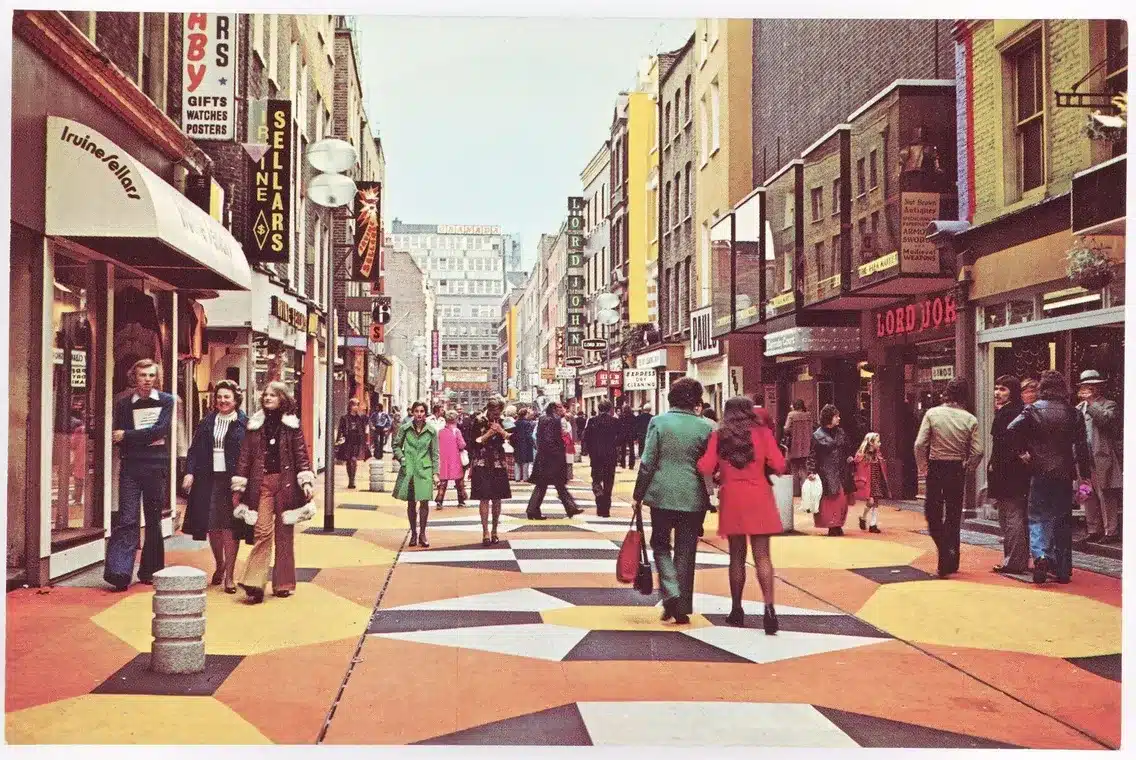
Even unevenness played a role. Variations in texture, slope, softness, and temperature constantly reminded you where your body was in space. You adjusted, balanced, leaned, stretched. Space wasn’t passively consumed, it was negotiated.
Modern architecture, by contrast, often treats bodily awareness as a design flaw.
When Down Became “Low”
Our discomfort with floors says a lot about modern values. In many cultures, the floor remains a primary living surface: people sit, eat, sleep, gather, and cook close to the ground. Compare that to contemporary Western interiors, where nearly every activity has been elevated onto chairs, tables, beds, countertops, platforms etc.
The floor became associated with dirt, disorder, even shame. We joke about the “five-second rule” because touching the ground feels vaguely contaminating. But hierarchy is embedded in that language too. If something is “beneath” you, then you can imagine yourself above something, or someone. Distance from the ground becomes associated with status, cleanliness, and control. As described by Silvia Federici, the body is where politics is made. This flattened architecture separates us from our bodies. With each sterile flat floor we uphold the Victorian prude discouraging touch, weight and intimacy. It’s architecture that rewards obedience and separation.
Flattened architecture reflects this mindset. Sterile surfaces discourage touch, looseness, improvisation. They reward orderly movement and passive behaviour. The body becomes something architecture manages rather than engages. Floors used to be social and tactile but cultural imperialism has homogenized and sanitised our lives.


The Body Problem
The strange thing is that other disciplines already understand this: suppress natural behaviours for too long and the body pushes back, often leading to unintended perversions. However, in architecture it’s barely mentioned. By suppressing our touch we either end up reaching out in abnormal ways to our nature, or experience negative health outcomes.
While research is still limited, a 2005 study by the Oregon Research Institute1 revealed that walking on uneven floors lowers blood pressure and improves balance. Eating on the floor has many health claims such as aiding digestion and regulating blood circulation and appetite. Add in the general consensus that moving and stretching your body throughout the day is good for you and it’s clear the easy path isn’t so easy in the long run.
Architects Arakawa and Madeline Gins are trailblazers in this regard. Their projects reject smooth predictability in favour of uneven terrain that forces occupants to think with their bodies. Sloped floors, unexpected level changes, and unstable surfaces demand balance and bodily awareness. As Gins states, “There’s no straight line on our feet or our bodies.” .
A common criticism is accessibility. Yet visitors, including those with disabilities, reported increased stability and awareness inside spaces like the Bioscleave House.
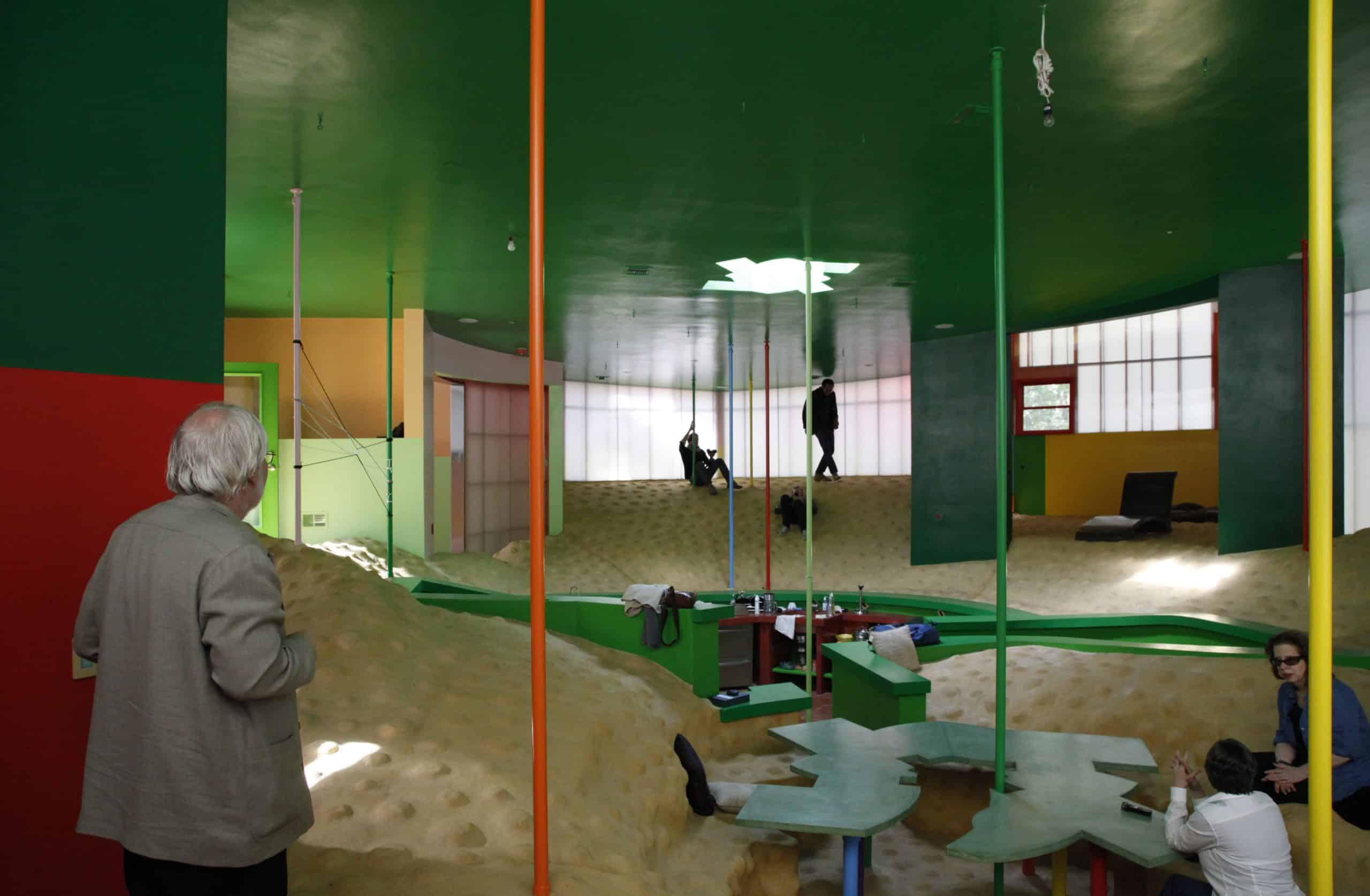
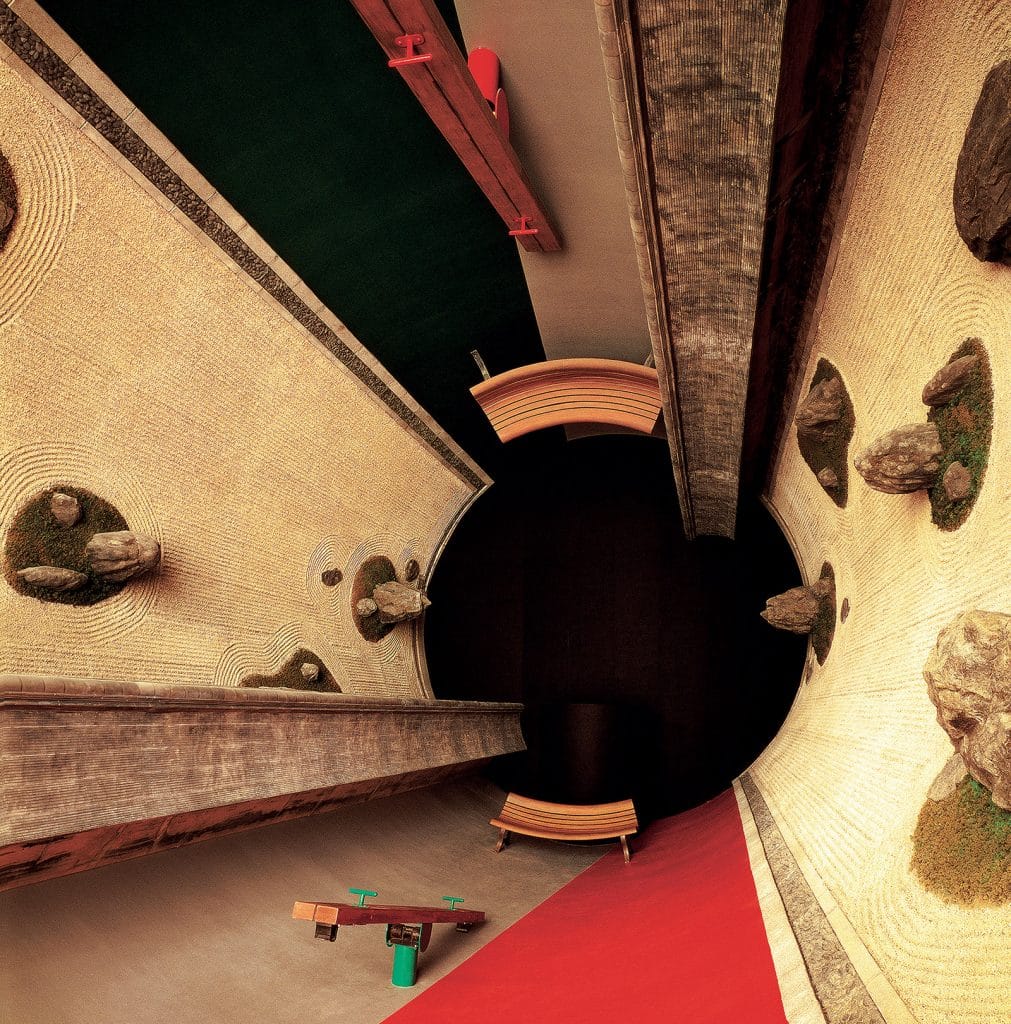
Interestingly, many contemporary experiments with uneven floors appear in spaces for children. Projects like The Playscape and YueCheng Kindergarten in China use slopes, ramps, and shifting surfaces to encourage balance, decision-making, and exploratory movement. Designers understand instinctively that children develop through physical negotiation with space.
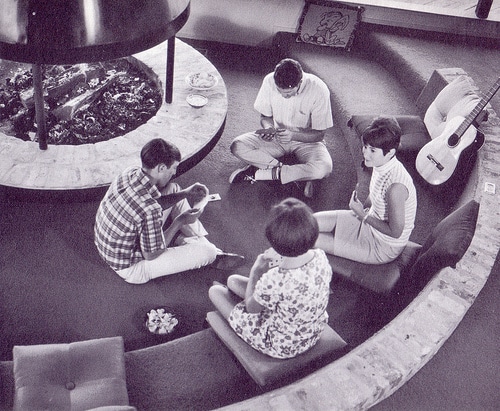
Adults, apparently, are expected to stop playing. In our current climate in which alienation and disconnection are rampant, people are craving texture again. Which may explain the return of conversation pits, soft landscapes, and tactile interiors across contemporary design culture. We’re remembering that it’s from roughness that sparks fly.
The Soul Problem
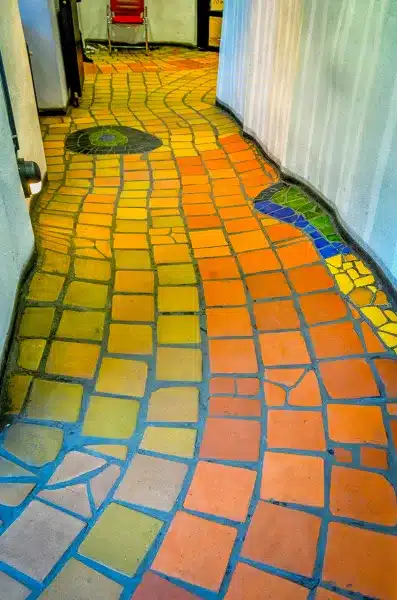
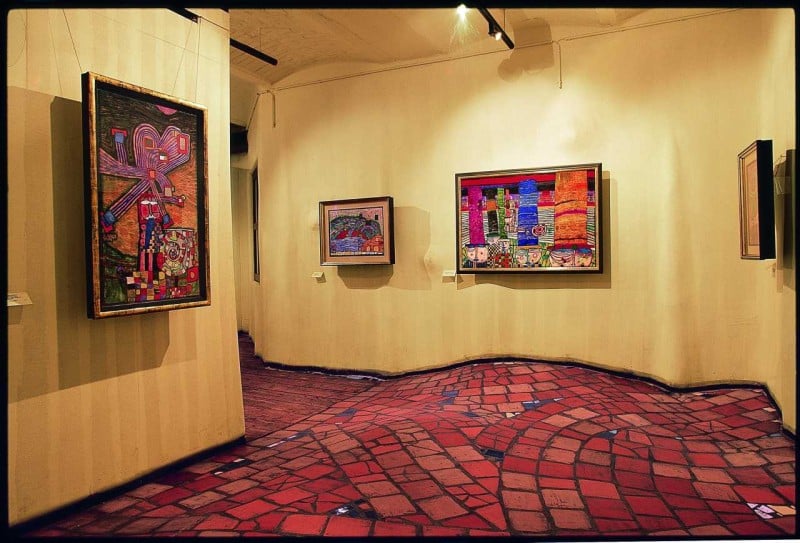
While there are clear measurable bodily improvements through floorplay, Hundertwasser argues it’s also benefits the soul, “If modern man is forced to walk on flat asphalt and concrete floors… a crucial part of man withers and dies. This has catastrophic consequences for the soul, the equilibrium, the well being and the health of man”.
It sounds dramatic until you think about the environments we use as punishment: blank white rooms, fluorescent lighting, sensory deprivation. We already understand that humans suffer in spaces devoid of texture and stimulation. It makes sense that dulling our textural daily input will make us feel bad. So why design everyday life that way?
Flat floors remove opportunities for connection, between body and ground, movement and awareness. As Hundertwasser bluntly put it:
“The flat floor is an invention of architects. It suits machines, not humans.”
Floorplay
Floorplay isn’t about turning buildings into obstacle courses. It’s about remembering that humans are physical, sensory creatures.
A flat floor tells you how to behave. Floorplay asks something from you instead. It invites exploration, adjustment, and participation. It asks you to figure it out. Through slopes, textures, softness, changing levels, and interactive surfaces, floors can become active participants in daily life rather than invisible infrastructure.
These uneven environments reintroduce small moments of challenge and delight into routines that have become overly smooth and efficient. They encourage balance, curiosity, movement and play, not as childish distractions, but as essential parts of being human. To navigate them is to reconnect with your body and your surroundings in ways flatness rarely allows.
For decades, architecture has optimised for efficiency predictability, and control above all else: smooth circulation, predictable movement, controlled outcomes. But we are physical, sensory beings, not machines optimised for frictionless movement. We should be questioning why efficiency has become architecture’s highest virtue, and what we lose when comfort is all we experience.
Floorplay offers something harder to quantify: freedom, connection, adaptability, and kinesthetic joy. We flattened the ground so we wouldn’t have to feel it; maybe it’s time architecture stopped avoiding the earth beneath our feet.
- Li, Fuzhong et al. “Improving physical function and blood pressure in older adults through cobblestone mat walking: a randomized trial.” Journal of the American Geriatrics Society vol. 53,8 (2005): 1305-12. doi:10.1111/j.1532-5415.2005.53407.x ↩︎
Thank you for reading!
If you enjoyed this, click here for more opinion pieces.
Let me know down below what you think, should we be introducing more floorplay into our lives?