

No-one loves a manifesto more than an architect.
Here are some of the best world changing essays, articles and manifestos that by the end will make you a better architect.
click titles to open up their descriptions (this page is a work in progress)

“It is necessary to understand history, and he who understands history knows how to find continuity between that which was, that which is, and that which will be.”
-Le Corbusier
Architecture Manifestos
Principle of Cladding- Adolf Loos (1898)
Programme- Henry van de Velde (1903)
Fermentation in Architecture- Hans Poelzig (1906)
Credo- Henry van de Velde (1907)
Ornament and Crime- Adolf Loos (1908)
This seminal text changed the trajectory of architecture. His main argument is that ornament is not just unnecessary but primitive, wasteful, and stalling societal progress. His utilitarian approach states that adding ornament to designs should be a criminal act as it does so much harm to society.
Firstly it wastes time, energy, and materials. In the act of creating the object but also in the fact it shortens it’s lifespan as tastes change, making it obsolete. Ornament increases labour and material costs meaning longer working hours and lower wages for workers, which further impedes economic progress.
Secondly, in that it obscures and violates the true form of the object, that beauty comes from the truth and honesty of the natural material and it’s ergonomic form. To progress as a society and utilise our time and resources effectively, it’s best to remove ornament and celebrate the raw natural beauty of functionality.
Organic Architecture- Frank Lloyd Wright (1910)
Aims of the Werkbund- Hermann Muthesius (1911)
Werkbund Theses and Antitheses- Hermann Muthesius/Henry Van de Velde (1914)
Glass Architecture- Paul Scheerbart (1914)
Futurist Architecture- Antonio Sant’Elia/Filippo Tommaso Marinetti (1914)
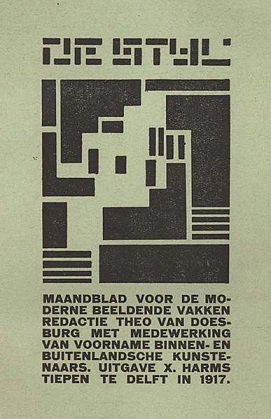
Manifesto I- De Stijl (1918)
Published at the end of World War One, the manifesto called for a shift from individualistic despotism to a collective consciousness by merging all the arts into unified collective. By using pure non-representational forms such as geometry and primary colours, they hoped to capture universal spiritual truths rather than individual expression. By removing the traditional dogmas that led to the war, their new consciousness aimed for a global unity.
The De Stijl journal propagated the Neoplasticism movement influencing key architects such as Mies van der Rohe, Eames, and Zaha Hadid.
A Programme for Architecture- Bruno Taut (1918)
Under the Wing of a Great Architecture- Work Council for Art (1919)
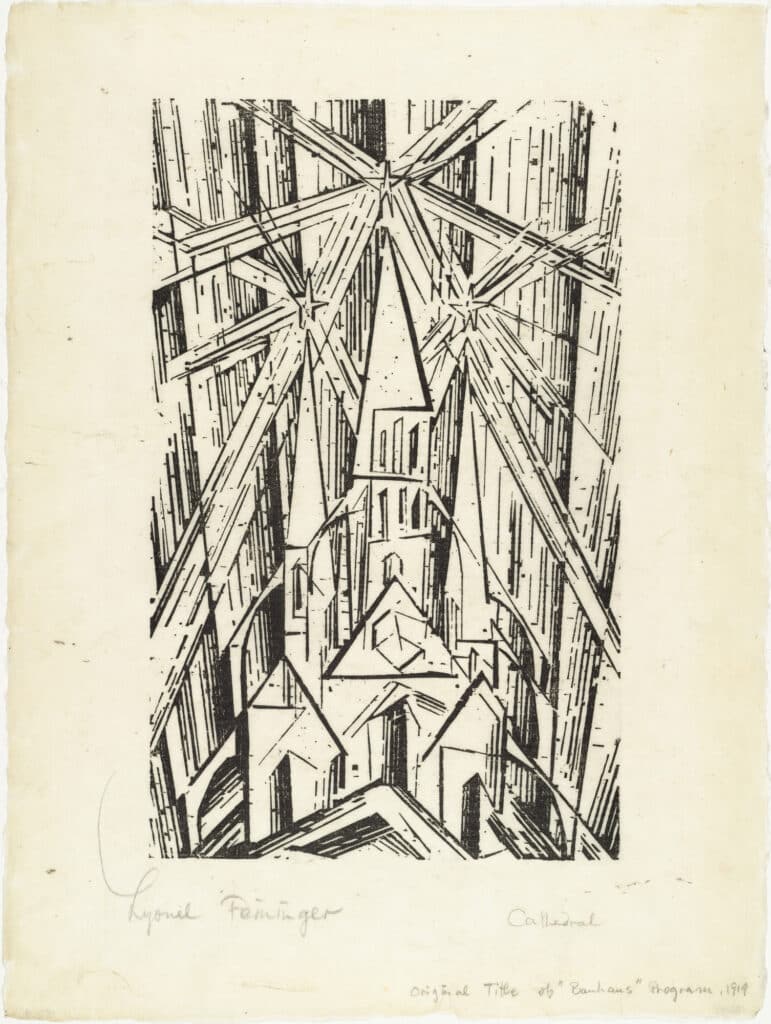
Programme of the Staatliches Bauhaus in Weimar- Walter Gropius (1919)
The Bauhaus school was revolutionary as the forebearer of Modern architecture. The manifesto lays out their goals of creating a holistic approach to architecture where art, craft, and technology come together as one.
New Ideas on Architecture- Gropius/Taut/Behne (1919)
The Problem of a New Architecture- Erich Mendelsohn (1919)
Towards a New Architecture:Guiding principles – Le Corbusier (1920)
The architectural manifesto.
Down with Seriousism- Bruno Taut (1920)
Basic Principles of Constructivism- Naum Gabo/Antoine Pevsner (1920)
Frühlicht (Daybreak)- Bruno Taut (1921)
Creative Demands- De Stijl (1922)
Manifesto for the First Bauhaus Exhibition- Oskar Schlemmer (1923)
The New Engineer is Coming- Werner Graeff (1923)
Dynamics and Function- Erich Mendelsohn (1923)
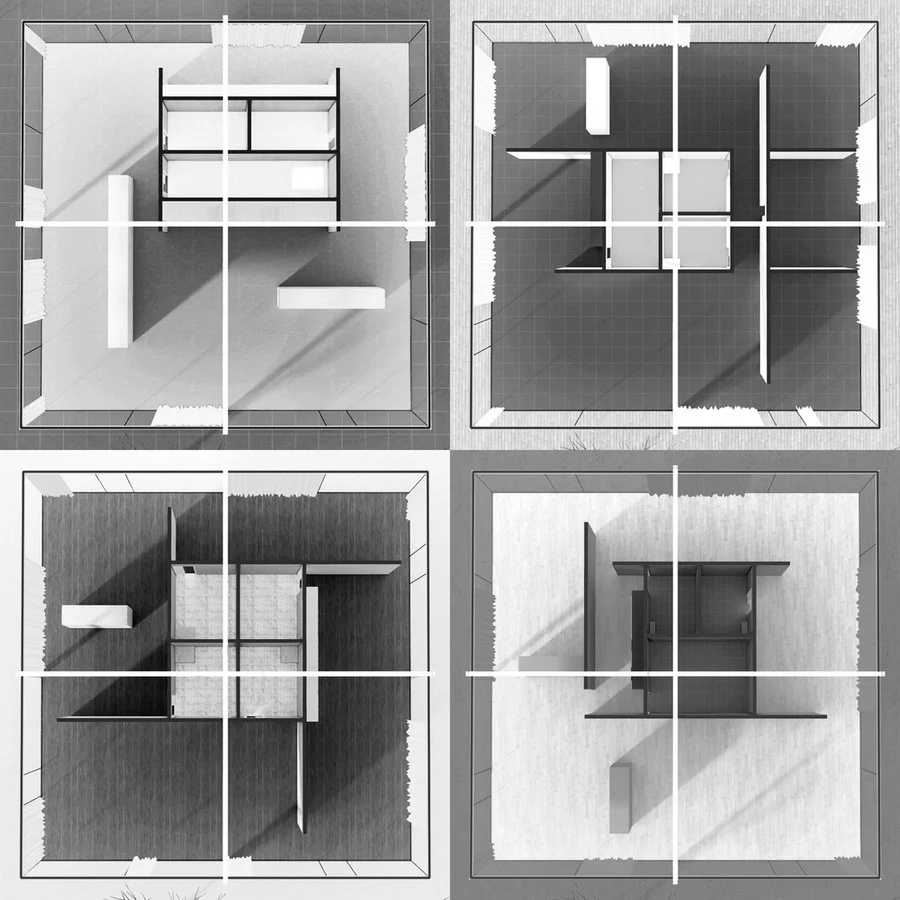
Working Theses- Ludwig Mies van der Rohe (1923)
“Create form out of the nature of the task with the means of our time.”
A short manifesto that states how architecture is a living object defined by the current culture.
Analytical and Utopian Architecture- Arthur Korn (1923)
Industrialized Building- Ludwig Mies van der Rohe (1924)
Suprematist Manifesto Unovis- Kasimir Malevich (1924)
Casa Nova- Hermann Finsterlin (1924)
Toward a Plastic Architecture- Theo van Doesburg (1924)
International manifesto- Situationists (1960)
Guiding Principles of Town Planning- Le Corbusier (1925)
City of Space- Frederick Kiesler (1925)
Principles of Bauhaus Production- Walter Gropius (1926)
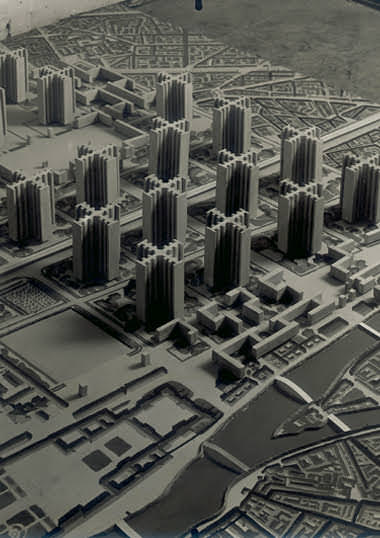
Five Points Towards a New Architecture- Le Corbusier/Pierre Jeanneret (1926)
The manifesto lays out how to utilise the new construction method of reinforced concrete in five concise points. By elevating the building on load bearing columns, the walls are freed from engineering and can be adaptable. Incorporating ribbon windows for uniform light and rooftop gardens for green spaces the building can provide luxury in a new modern way.
On Form in Architecture- Ludwig Mies van der Rohe (1927)
Formulations Towards a Reorientation in the Applied Arts- Hugo Häring (1927)
Building- Hannes Meyer (1928)
Synthesis: World Architecture- Erich Mendelsohn/Bernahrd Hoetger (1928)
La Sarraz Declaration- CIAM (1928)
ABC Demands the Dictatorship of the Machine- ABC (1928)
Building- Hannes Meyer (1928)
Ideological Superstructure- El Lissitzky (1929)
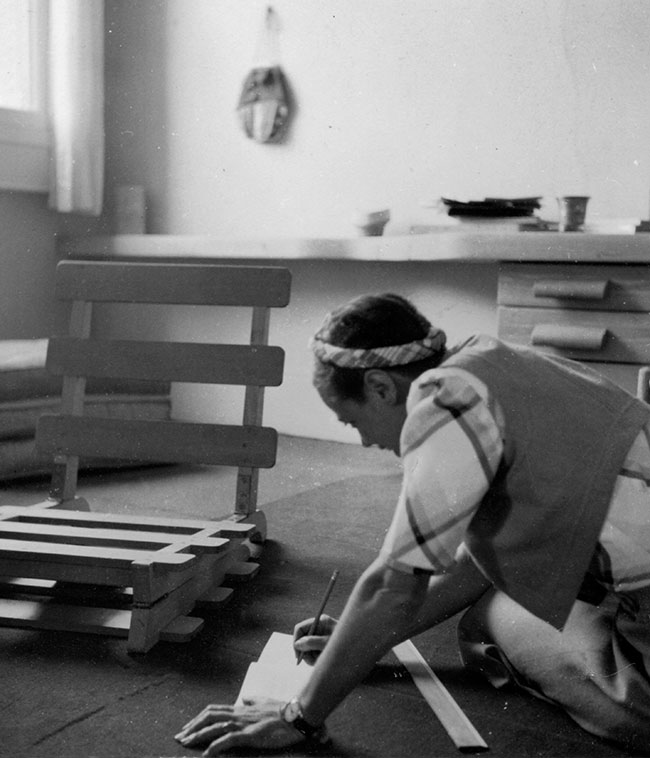
Wood or Metal- Charlotte Perriand (1929)
A ode to metal and it’s revolutionary effects on design. Perriand championed the use of metal setting out how versatile and beautiful it can be. Furthermore, she believed it was essential to progress in the new modern age. Metal can create new unimagined structures, and can be mass produced and recycled, reducing both physical and labour waste. Her devotion to the material led to some of the most iconic furniture and architecture designs of modern times.
House by the Sea- Eileen Gray and Jean Badovici (1929)
The New Era- Ludwig Mies van der Rohe (1930)
Young Architecture- Frank Lloyd Wright (1931)
The House as an Organic Structure- Hugo Häring (1932)
Universal Architecture- R. Buckminster Fuller (1932)
Charter of Athens: Tenets- CIAM (1933)
A Programme for City Reconstruction- Walter Gropius/Martin Wagner (1943)
In the Nature of Materials- Frank Lloyd Wright (1943)
Originally published in Frank Lloyd Wright: An Autobiography. Book 4. Freedom
A Prefabrication Vocabulary- Rudolf Schindler (1943)
City Hall- Charles Eames (1943)
The Athens Charter- Le Corbusier (1943)
Inspired by the CIAM 1933 meeting, Corbusier revealed his vision of post war urban development.
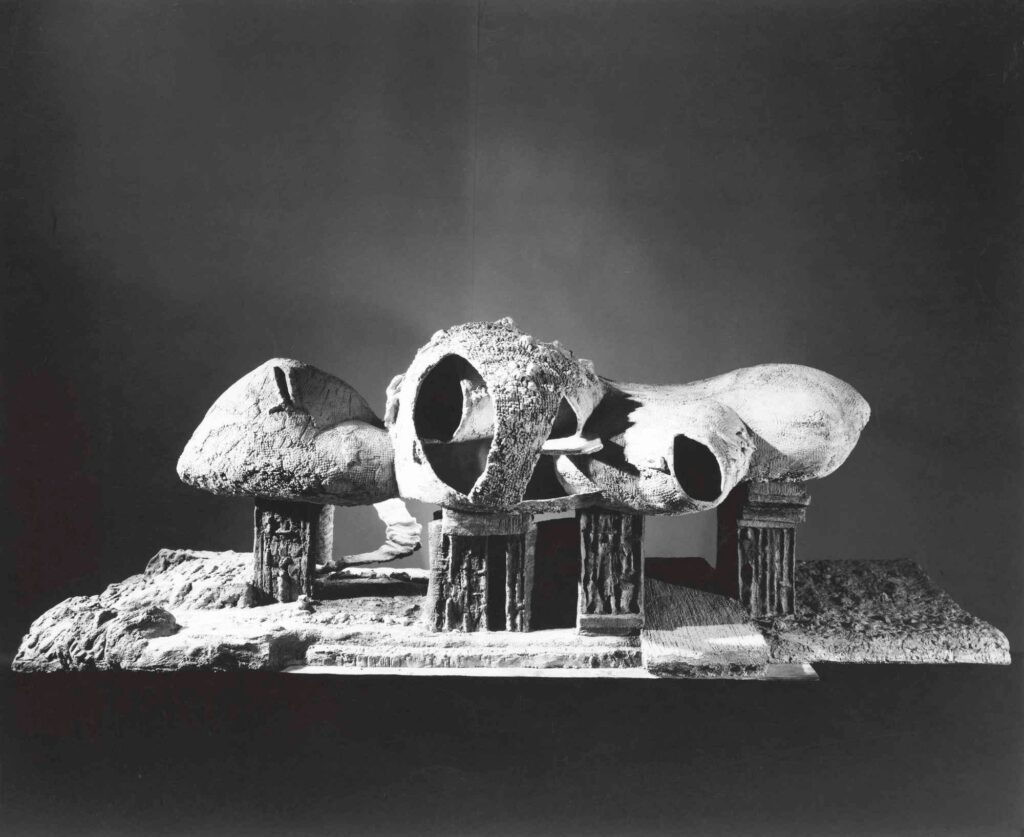
Magical Architecture- Frederick Kiesler (1947)
Recently published, Kiesler’s unfinished book project “Magical Architecture” investigated human homes from prehistoric times to now, connecting our building techniques to those of the natural world. He states “magic architecture [is] an architecture for everyone” taking inspiration from habitats designed by animals and humankind’s first dwellings. It’s a unique manifesto that provides an alternative narrative to the Vitruvian proposal.
Stones Against Diamonds- Lina Bo Bardi (1947)
First published in Marcelo Carvalho Ferraz (ed),
Lina Bo Bardi (São Paulo: Instituto Lina Bo Bardi, 1993)
Ineffable Space- Le Corbusier (1948)
Forms- Henry van de Velde (1949)
Technology and Architecture- Ludwig Mies van der Rohe (1950)
With Infinite Slowness Arises Great Form- Ludwig Mies van der Rohe (1953)
Survival Through Design- Richard Neutra (1954)
New Games!- Jacques Fillon (1954)
Seven Theses- Konrad Wachsmann (1957)
Architecture is the Thoughtful Making of Spaces- Louis Kahn (1957)
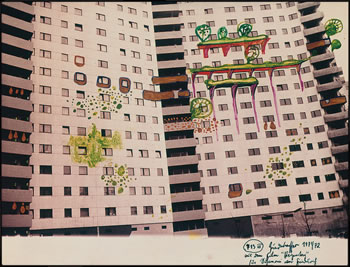
Mould Manifesto against rationalism in architecture- Hundertwasser (1958)
Hundertwasser argues for a more anarchist way of building in which everyone is free to build their own space. Rallying against rationalism, he argues the modern apartments and the “straight lines” that make them are like rabbit cages crushing our souls and causing many of our ailments. He proposes architects work as a technical advisors to inhabitants rather than designers. In doing so their personhood can spread like mold over the existing architecture.
Situationist Definitions- Constant/Debord (1958)
Towards a New Architecture- Reinhard Gieselman/Oswald Mathias Ungers (1960)
Order Is- Louis I. Kahn (1960)
Project for an Aerial Architecture- Werner Ruhnau/Yves Klein (1960)
Organics- William Katavolos (1960)
Programme for a Mobile Architecture- GEAM (1960)
The Space City- Eckhard Schulze-Fielitz (1960)
New Babylon- Constant (1960)
Organics- William Katavolos (1960)
Technology and Art- Lina Bo Bardi (1960)
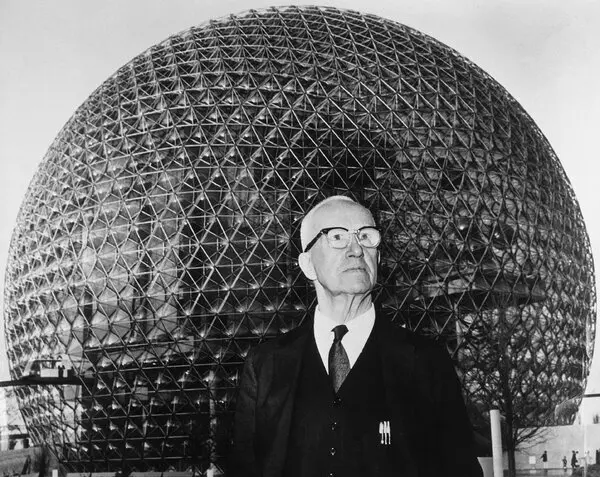
The Architect as World Planner- R. Buckminster Fuller (1961)
This is a critique of the current architectural system. When each of us focus on one single building we become blind to larger scale issues that we’re contributing to. If we collectively worked together to form a global plan we would be able to make “the total world’s resources serve 100% of humanity through competent design”.
The Ten Principles of Space Town Planning- Yona Friedman (1962)
Absolute Architecture- Walter Pichler/Hans Hollein (1962)
We Demand (1963)
Oblique Function- Paul Virilio (1964)
A Gentle Manifesto- Robert Venturi (1966)
Originally published in Complexity and Contradiction in Architecture
Motion of May 15- Strike Committee of Ecole des Beaux Arts (1968)
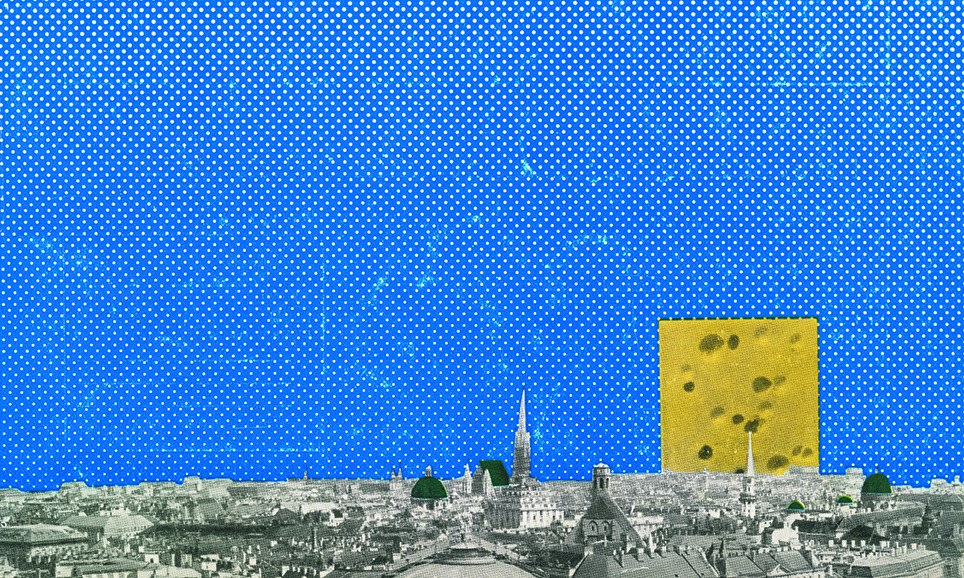
Everything is Architecture- Hans Hollein (1968)
In the new information age architects must expand on what a building can be, “Today a museum or a school can be replaced by a TV set. Architects must cease to think only in terms of buildings.” He argues using nonmaterial means such as light, temperature, smell, or even drugs to create architecture. In the end architects will dabble in all fields in so that all of us become architects and everything becomes architecture.
No-stop City- Archizoom (1969)
The Logic of Uselessness- Toyo Ito (1971)
Wages Against Housework- Silvia Federici (1974)
Federici calls out the subjugation of women by the domestic sphere. Still revolutionary today, she argues that women are essentially unpaid slaves being forced to undertake all domestic tasks with no compensation. The material feminist movement changed how architects designed care spaces and liberated women from the home.
Sulphur Building- Witold Rybcynzki (1975)
Life in the Metropolis or the Culture of Congestion- Rem Koolhaas (1977)
Architecture Must Blaze- Coop Himmelb(l)au (1980)
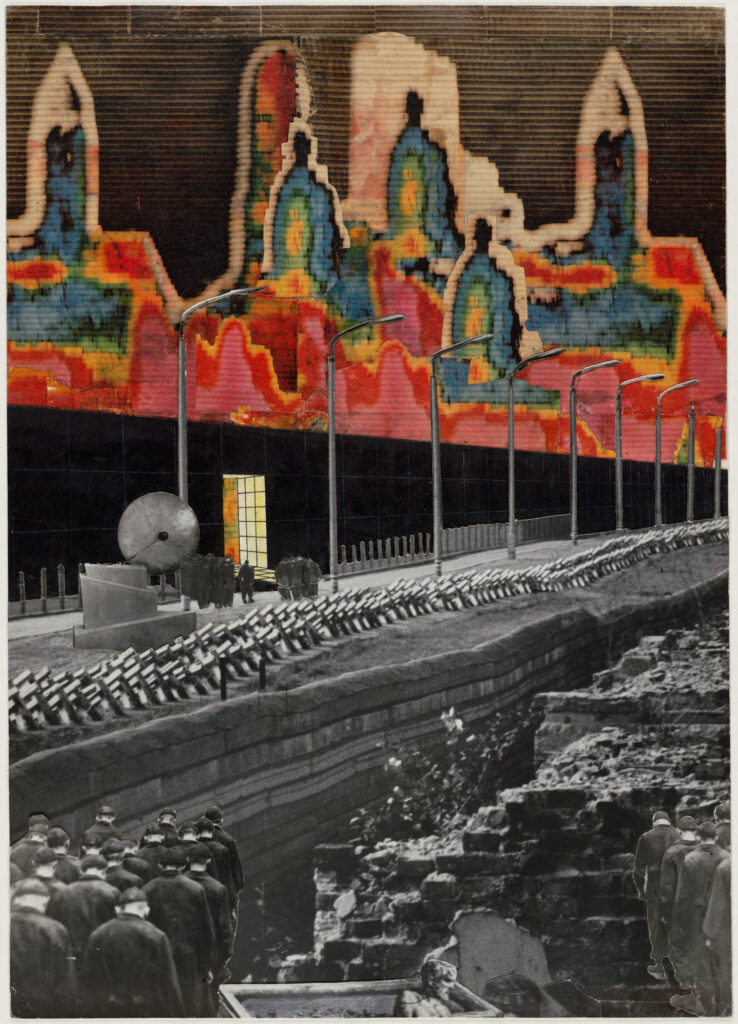
Junkspace- Rem Koolhaas (2002)
Koolhaas introduces a new term “Junkspace” describing the leftover space created through modernisation and consumer capitalism. He argues that architecture has become corrupt focusing on convenience and consumption rather than civic integrity. This led to the endless air-conditioned spaces that are built around commercial logic that become generic junk as soon as you stop spending.
V.Plus- Locaton & Vassal (2004)
Essays
The Map of Four Kisses- Nuar Alsadir
From the Poetry Society, Alsadir uncovers the erotic in writing. Dancing through Sontag, Barthes, Derrida with ease in a stream of consciousness style, she come to revelations such as “you situate yourself in space and time, which situates your reader in space and time, lets you have a body, lets them have a body, and, within it, the capacity to experience erotically.”
Being at Home: Space for Belonging in a London Caff- Suzanne Hall
The London caff is an institution of greasy grub and interesting characters. Hall delves into how the unique spatial dimensions of a caff can create belonging, understanding and family; asking what does it mean to be a regular?
Between City and Desert- Manuel Herz and Eyal Weizman
The Jewish eruv tiptoes the line of what constitutes as home. It also brings up the more confusing question for local councils, does a piece of string need planning permission? Herz and Weizman talk us through the history of ‘home’ for Jewish people and how it has directly affected their interpretation of architecture and home.
Playgrounds and Bombsites: Postwar Britain’s Ruined Landscapes- Ben Highmore
Highmore excellently uncovers the life of children
Further Reading
For more information on manifestos I highly recommend the two books “Manifesto: A Century if Isms” by Mary Ann Caws and “Programs and Manifestoes on 20th-Century Architecture” by Ulrich Conrads. Also, the website designmanifestos.org has many manifestos digitalised.
For more must-read literature for architects, head over to my ultimate booklist which has every book a architect needs on their bookshelf.
Thank you for reading!
Comment down below your favourite, or let me know if I’m missing it from the list.